
Housing finance major HDFC on Monday reported a 16 per cent growth in standalone net profit to Rs 3,700 crore for the January-March quarter, helped by record loan sales on the back of benign interest rates and the resultant fall in cost of funds along with the near-total repayments that culled provisions and credit costs. For the full year, the company, which is working on a reverse merger with its banking subsidiary, has booked a net profit of Rs 13,742 crore, up from Rs 12,027 crore in FY21, vice-chairman and chief executive Keki Mistry said on Monday in an earnings call with analysts. On a consolidated basis, net profit for the quarter surged 21.6 per cent to Rs 6,892 crore on-year and for the full year it jumped 21 per cent to Rs 22,595 crore, Mistry said and guided towards better days.

The circular says even a day's delay in servicing loans would be now taken as a 'default'. And once in default, for loans above Rs 2,000 crore, the banks will have to arrive at a resolution within 180 days, else lenders will have to file an application under the IBC within 15 days.
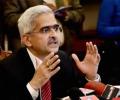
Stating that recent agriculture reforms have opened new opportunities, the RBI Governor said the farm sector is emerging as a bright spot.

Question remains, what happens when the overseeing committees' members themselves are questioned by investigative agencies?
.jpg)
The right sequence would be to gradually reduce SLR

Delivering a public speech hours after the RBI launched a rescue act for Yes Bank on March 6, Governor Shaktikanta Das reiterated the RBI's affirmation to do whatever was needed to combat the coronavirus impact. On that day, India had only one confirmed COVID-19 infection, the World Health Organisation was five days off from declaring it as a pandemic and the financially debilitating lockdowns were not even on the horizon. Das' promise on efforts to mitigate COVID-19 impact appeared as a footnote in news reports from the event.
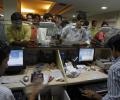
The government will not bring down its ownership in public banks.

Bureaucrats heading disinvestment and financial services usually don't get appointed as finance secretary.

Banking and telecom will see the highest impact of this transition.
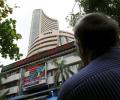
SBI, PNB, Bank of Baroda, Canara Bank, Dena Bank, Central Bank of India ended down 3%-12% each.

There isn't much Budget could do directly to help sectors.
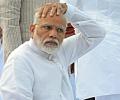
The truth can no longer be hidden despite 'headline management' by the ruling dispensation, the opposition party said.

Well then, what did DeMo achieve? As predicted by most economists, the volume of transactions fell, economic activity was adversely impacted, and some sectors (which were more dependent on cash transactions) witnessed greater disruption than others, says Rahul Khullar.

State Bank of India (SBI) chairman Rajnish Kumar, in conversation with Abhijit Lele, also says that the overhang of corporate debt stress will begin to recede in the next two-three quarters.

Prime Minister Narendra Modi will hold discussions with public sector banks (PSBs) and financial institutions to draw up an action plan for banking reforms

India has been a core portfolio holding for emerging market funds.
Experts attribute this to new launches in anticipation of a demand revival after the 2014 general elections.

Though the NITI Aayog did not give its estimates for the required GDP growth at constant prices, economists pegged it at 9 per cent, a feat not seen since the GDP series was revised with 2011-12 as the base year.

'The variables to watch include the monsoon, resolution of NBFC liquidity issues, GST collections, and NPA resolution.'

Once these banks start showing losses, they will not be able to pay dividends to the government nor pay taxes, which will further aggravate the situation for the government as its return on investment as an investor would be very negligible for the next few years, says M V Subramanian.

A total of 183 stocks rallied 10 per cent, of which 32 stocks saw price appreciation of 20 per cent each.

Farm loan waivers should not be regarded as expenditure but as incentive and investment, argues B S Raghavan, the distinguished civil servant.
Capex for next year expected to be up 25% to Rs 3 lakh crore

China had been trying hard to enter the Indian market, without opening its own to Indian products. There is an economic crisis in India-China relations that the Chennai Connect barely scratched the surface, points out Srikanth Kondapalli.

Private consumption is looking up and will get better as the full effect of the good monsoon is felt on rural income, and the effect of the payout from the Seventh Pay Commission is felt on urban income, say Anis Chakravarty & Rishi Shah.

Data used for the graph and cited elsewhere in the column were obtained from various publications of the RBI.

The Bank of Japan's action has nullified the effects of the end of the US' quantitative easing programme but the dependence of foreign institutional investors remains a concern

The trio, 'twin shocks' of demonetisation and GST, 'twin balance sheet' problem that has been weakening India's banking system and the 'twin deficit' problem will continue to challenge economic management and performance in the year ahead, says Shankar Acharya.

The banking sector's credibility is on thin ice. Unless the government takes strict steps, things could get worse.

The Reserve Bank of india is likely to tell state-run United Bank of India (UBI), which has seen erosion of capital due to bad loans and higher provisioning to implement prompt corrective action.

We should brace ourselves for more bad news in the coming quarters -- on economic output and growth, strains on the fiscal deficit, export slowdown, small and micro enterprises in distress, and further accumulation of NPAs in the banking sector, says Rahul Khullar.

A good monsoon could rein in food inflation. Largely good corporate results mean better days are ahead. Nifty may reach record levels, points out Devangshu Datta.

'Once the lockdown is lifted, we will need the mother of all fiscal and monetary policy support to sustain the economy,' advises Akash Prakash.

Advance corporation tax collections grew 8 per cent in H1FY17 against 6 per cent last year. A moderate pick up in advance corporation tax collections suggest the sector might not witness significantly high growth in FY17, says Dilasha Seth.

Nitin Desai suggests some concrete measures to revive investment and boost growth.

Watchdogs of the economy have not been barking and it is high time we noticed it, says Shreekant Sambrani.

NPAs, cost, fee income, productivity, HR reorientation are focus areas; schedules drawn for addressing all from weeks to a year.

Indradhanush-II is likely to chart out the process for resolution of non-performing assets.

The need for larger investment in infrastructure that is the biggest shortcoming, says A V Rajwade.

Top gainers from the Sensex pack are Infosys, Cipla, NTPC, ITC and Lupin
